How Often Should You Get a Roof Inspection in Chandler?
→ QUICK ANSWER
Once a year and after big storms is what we tell Chandler homeowners. Here's what NRCA and TRI Alliance recommend, why the fall check matters in Chandler, and what an inspection should cover.

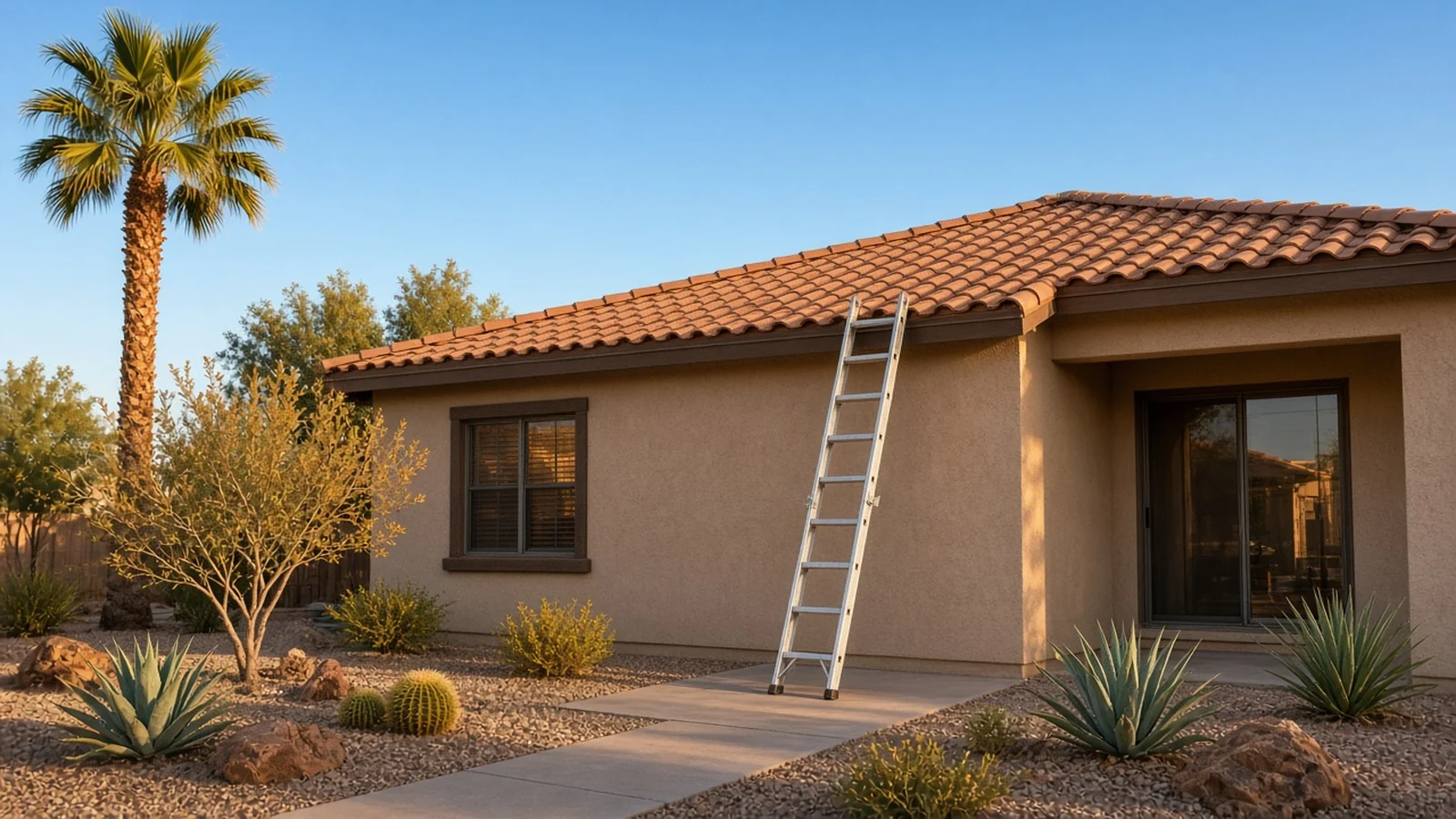
Once a year, plus after any big storm. That's what we tell Chandler homeowners. NRCA, the national roofing contractors' association, sets a stricter bar for roofs nationwide: twice a year, spring and fall, plus after severe weather. If you have a tile roof, the tile industry group TRI Alliance adds its own timeline: an inspection two years after the roof goes on, then every couple of years after that.
In Chandler, a spring check lands before monsoon season and a fall check after it. NOAA's storm record shows why the fall check matters here. Here's that record, and what an inspection should cover.
How often should I get my roof inspected in Chandler?
Our recommendation is an inspection once a year and after big storms. NRCA's national guidance goes further: inspect your roof "at least twice per year, preferably in the spring and fall," with extra inspections after severe weather such as a hailstorm. That comes from a 2013 NRCA article in Professional Roofing, written for roofs across the whole country. If you'd rather follow NRCA, its spring and fall timing fits the Chandler calendar well.
| When | Why it matters in Chandler | Who says so |
|---|---|---|
| Spring, before June 15 | Find loose, cracked or worn spots before monsoon season starts | NRCA (spring and fall) |
| Fall, after September 30 | See what the monsoon left behind, before fall hail | NRCA; NOAA storm record |
| After any hail or strong wind | Storms can hit outside monsoon season too | NRCA (after severe weather); NOAA storm record |
| Tile roofs: 2 years after install, then every couple of years | Tile has its own timeline | TRI Alliance |
The National Weather Service defines monsoon season as June 15 to September 30. So "spring and fall" lines up neatly with "before and after monsoon."
Why do inspections matter for Chandler's 1980s and 1990s homes?
A lot of Chandler was built in a 20 year window. Nearly half of Chandler homes (about 47%) went up between 1980 and 1999, according to the U.S. Census Bureau (American Community Survey, 2024 5-year estimates). The 1990s account for 27.2% and the 1980s add 19.8%. Another 26.1% were built from 2000 to 2009.
House age isn't roof age, though. Plenty of those homes have been re-roofed since they were built. If you bought the house and don't know when the roof went on, a roof inspection is the easiest way to find out where it stands. Our guide on how to find out how old your roof is walks through the paperwork side.
Should I get my roof checked after monsoon season, too?
Yes, and NOAA's record for Chandler is the reason.
Monsoon wind is the obvious threat. On the evening of August 25, 2025, between about 5:14 and 5:38 PM, NOAA logged estimated thunderstorm gusts in Chandler of about 55 to 62 mph. Part of a block wall came down in one neighborhood, and large pine trees were knocked over at a lavender farm.
Hail is the part people forget. Since 2016, NOAA has placed two 1 inch hail reports inside Chandler:
- Dec 9, 2019: near Loop 101 and Warner Road in Chandler
- Sep 26, 2025: near West Chandler Boulevard and Metro Boulevard in Chandler
One of those two came in December, well after September 30, when monsoon season officially ends. For scale, roofing engineers at Haag list about 1 inch as the smallest hail that can damage three-tab shingles.
Countywide, 42 of 98 Maricopa County hail reports from 2016 through July 2026 came in October and November, from just 12 storm days. Fall hail isn't common, but one storm can hit a lot of roofs at once.
That's the case for the fall check: our reading of NOAA's record, not a rule anyone wrote down.
What should a roof inspection look for?
NRCA describes a maintenance inspection as a careful visual check of the roof and the walls and chimneys that meet it. Here's what NRCA and TRI Alliance say to watch for:
- Shingle roofs: curling or splitting shingles are signs of wear. Loose or missing tabs should be repaired so the roof stays watertight.
- Tile roofs: cracked, broken or missing tiles need attention.
- Where the roof meets the house: sidewalls and chimneys that butt up against the roof surface.
When we inspect a roof, we walk it, take photos, and you get a written report. There's no charge, and it usually takes under an hour.
Here's an example from one of our jobs (Chandler, July 2026). The inspection photos flagged a whirlybird vent for replacement, cracked stucco where the roof meets the wall, and a small opening in a stucco parapet that needed sealing.
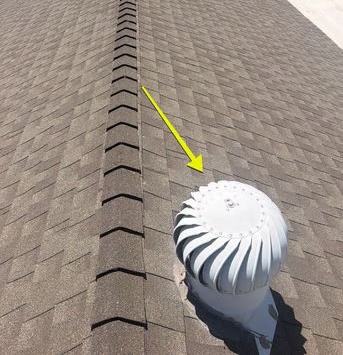


On tile roofs, the tile is only part of the story. On most East Valley tile roofs, the underlayment wears out long before the tile does. That's one more reason an inspection beats a glance from the driveway.
Why keep inspection photos and records?
Because if a storm ever does damage your roof, dated photos of how it looked before help show what changed and when.
If you do end up filing a claim, here's how we help. With your permission, we meet the adjuster at your home for the inspection. At your request, we send photos and inspection reports to your insurance company, and we prepare supplements when they're needed. What your policy covers is between you and your insurer. We don't make that call.
What if the inspection shows I need a new roof?
Then you'll want to know the permit rules before you pick a material. Chandler's Home Owners Building Permit Manual says you need a re-roof permit when you:
- Switch to a different material, such as concrete tile. The city requires an engineering analysis to check that the roof can carry the extra weight.
- Replace the roof with like material when it already has more than two layers.
We can pull a permit for your re-roof when one is required. If you're not sure whether yours needs one, Chandler Development Services is at (480) 782-3000.
For budgeting, our typical ranges are $8,000 to $15,000 for a shingle re-roof, $12,000 to $22,000 for a tile re-roof, and $8,000 to $14,000 for tile underlayment only. Those are typical ranges, not quotes. Your roof's size and condition set the real number.
FAQ
Can I inspect my own roof?
From the ground, yes. Getting on the roof is another story. NRCA doesn't recommend homeowners walk on roofs without experience and proper safety equipment. On tile, walking can break tiles, and TRI Alliance notes that most manufacturers don't warrant breakage from foot traffic. TRI recommends using a trained roofing professional.
How often should a tile roof be inspected?
Our recommendation for any roof, tile included, is once a year and after big storms. TRI Alliance says a tile roof should be inspected two years after it's installed and every couple of years after that. NRCA's national guidance for all roofs is stricter: at least twice a year, spring and fall, plus after severe weather.
Do I need a permit to re-roof in Chandler?
Chandler's permit manual says you need one if you're switching to a different material such as concrete tile (with an engineering analysis) or if you're re-roofing with like material and the roof already has more than two layers. To check your own project, call Chandler Development Services at (480) 782-3000. We can pull a permit for your re-roof when one is required.
Is my roof as old as my house?
Not always. Many Chandler homes from the 1980s and 1990s have been re-roofed at least once. Permit records, closing papers or an inspection can tell you what you actually have up there.
Book an inspection in Chandler
Book an inspection with us. There's no charge, and it usually takes under an hour. All Storm Roofing was founded in 2022. Our office is in Gilbert, right next door, and we serve Chandler and the whole Valley down to Tucson. We answer 24/7 at (602) 806-6806, or you can book an inspection online.
WRITTEN BY
Tuuta Pulotu is the CEO and co-founder of All Storm Roofing. He was born and raised in Arizona. His mom is from Hawaii, his dad from Tonga, and Tuuta grew up in the trades working alongside his father, who's been running a landscaping and masonry crew in the Valley. Before founding All Storm in 2022, Tuuta spent years in solar sales. Long enough to watch too many East Valley homeowners get pushed into roof decisions they didn't fully understand. He started All Storm to flip that conversation: be the contractor who tells homeowners what's actually going on with their roof, even when the truth costs him the job. He runs All Storm out of Gilbert, where he lives with his wife and four kids. AZ ROC #345156. TAMKO Pro Diamond Certified. The only TAMKO Pro Diamond Certified contractor in Arizona.