Best Time to Replace Your Roof in Arizona: Why October and November Beat Spring in the East Valley
→ QUICK ANSWER
The best time to replace a roof in Arizona is October through November. Here's why post-monsoon beats spring in Gilbert, Chandler, and the East Valley.

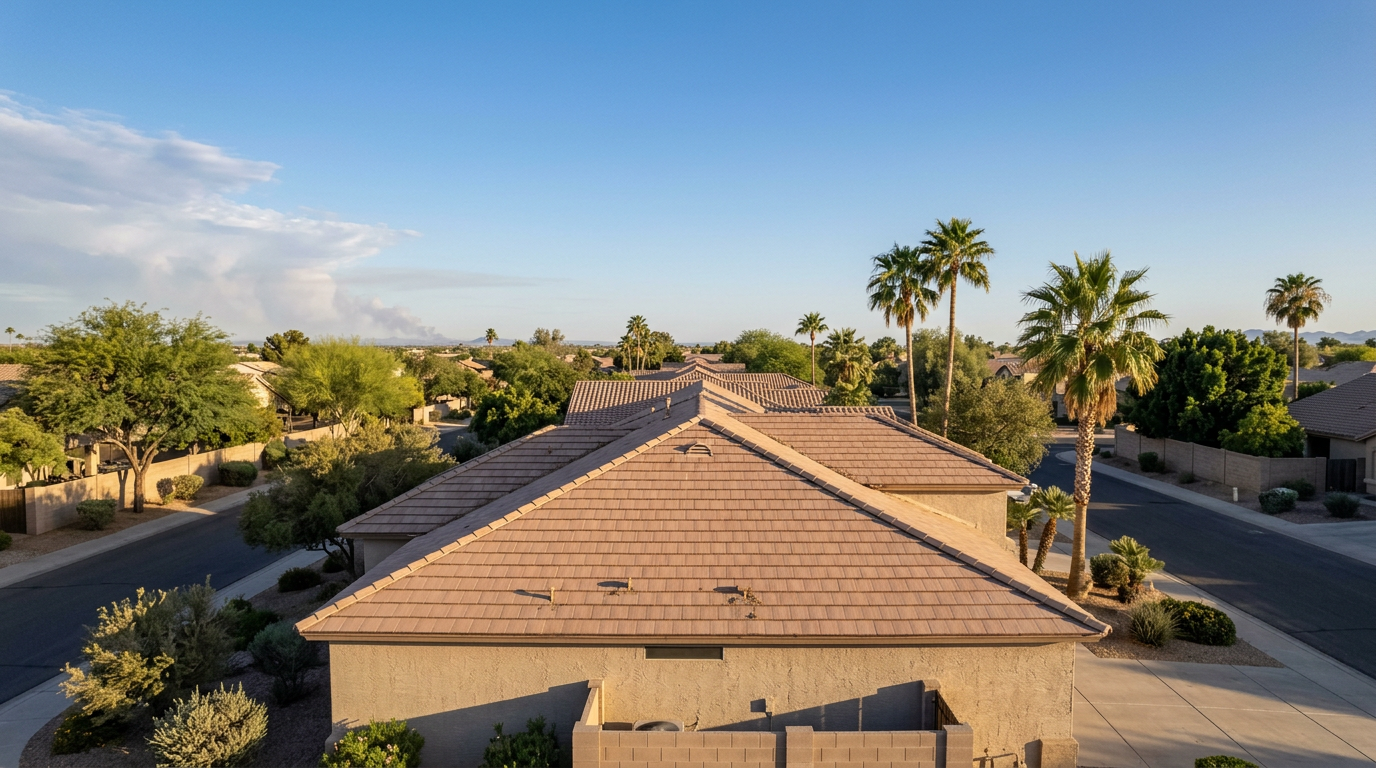
Short answer: The best time to replace a roof in Arizona is October through November. Monsoon season ends September 30, leaving the East Valley with stable weather, full crew days, and shorter scheduling waits than spring. October highs near 89°F still allow safe installs. All Storm Roofing is licensed Arizona ROC #345156 and Tamko Diamond Certified.
Monsoon season ends September 30. The window opens the day after. If you've been sitting on a roof replacement decision, that's the one to aim for.
The best time to replace a roof in Arizona is October through November. That's not a hedge. That's the window we'd put any East Valley homeowner in if they could choose. The monsoon is behind you, the crews have bandwidth, and if the summer did any damage, the evidence is still fresh enough to document properly.
Spring is fine. But it's not better. We'll explain why.
The Season-by-Season Truth
October and November. This is it, and not because it's cool. October still runs hot here. The normal high in Phoenix is a little over 89°F, and most years bring a few days that touch triple digits. November is the genuinely mild month at a normal high near 77°F. What changes in October isn't the temperature. It's the risk. The monsoon is finished, so nothing can roll in on an open deck at 4pm. Crews get full days without the 110°F heat that cuts summer shifts short. And the weather stops being a variable.
December through February. Still workable. Arizona winters are nothing like other states' winters, and the East Valley stays mild enough that crews keep rolling. This is the one window where shingle temperature genuinely matters. TAMKO and GAF both draw the cold-weather line at 40°F. Below that, shingles get brittle at the edges and the seal strips won't bond on their own, so every shingle has to be hand sealed. Phoenix daytime highs in January normally run around 68°F, well clear of that line. Cold isn't the constraint here. Daylight is. Shorter days mean shorter install windows. December through February is a legitimate backup if fall fills up.
March through May. March and April cooperate. May is already running near 95°F and behaving like summer. And the schedules don't cooperate at all. This is when every homeowner who noticed something wrong over winter tries to get ahead of monsoon season. Roofing companies book solid. We've seen homeowners in Chandler waiting 4-6 weeks for a crew in April. That demand spike means faster isn't actually faster, and you're racing toward July with a packed calendar.
June through September. Avoid it. Monsoon season runs June 15 through September 30 in the East Valley. Extreme heat. Afternoon storm risk. A reroofing job that starts Monday morning can see a monsoon roll in by Thursday afternoon with an open deck. And the heat itself creates real worker safety issues when daily highs are at 110°F and the roof surface is cooking at 150°F or above. If you have a crisis, obviously you replace. But planned replacements belong in the other three seasons.
The Insurance Angle Most Homeowners Miss
Here's something the "best time for roofing" articles usually skip.
If your roof took monsoon damage this summer, October and November aren't just good for scheduling. They're important for your insurance claim.
Arizona homeowners insurance typically covers roof damage from sudden storm events, not normal aging or wear. The cleaner your paper trail, the better your claim outcome. A post-monsoon inspection in October, with photos tied to a specific storm date, gives an adjuster a clear picture. Waiting until April to document damage from July is a much harder case to make. The evidence ages. Adjusters look for reasons to call it gradual wear rather than storm damage.
Arizona homeowner policies typically contain a contractual clause that shortens the time to file a lawsuit to one year from the date of loss. Getting your inspection done in fall, while the monsoon season is recent, keeps every option open.
Why the East Valley Is Different
Most roof-timing advice online is written for somewhere else. Not here.
The East Valley's monsoon season is the variable that changes everything. Gilbert and Queen Creek don't just get summer rain. They get microbursts that routinely hit 60-70 mph, haboobs with wind-driven debris, and afternoon cells that can drop an inch of rain in 45 minutes. A roofer tearing off your old roof can't control what the sky does at 4pm.
Post-monsoon October and November aren't just good weather. They're the first stretch of genuinely predictable weather the East Valley has seen since May. That predictability is what lets a crew plan a 1-3 day job with confidence. No weather day calls. No emergency tarping. A fall inspection catches everything the summer did. A spring inspection catches only what carried over from the prior year.
Why Spring Gets Oversold
Ask around and you'll hear "spring is the best time" pretty consistently. The weather is the reason, and for March and April that's fair. No argument.
But here's what that advice misses: spring is when contractor demand peaks. Pre-monsoon panic sets in. Homeowners who let things slide all winter finally make the calls. Crews that had January availability are suddenly booking into May. We've watched a 1-week lead time in February turn into a 5-week wait by April. And now you're on the back end of spring, rushing toward July with a calendar that's tighter than it looked.
October is calmer. Post-monsoon demand was already absorbed by the rush of August and September emergency repairs. October is quieter. You can get a crew scheduled in days instead of weeks, and there's no storm breathing down anyone's neck.
What Your Roof Type Changes
This decision isn't the same for every material.
Concrete tile is the dominant roof type in Gilbert, Chandler, and Queen Creek neighborhoods. Tile itself lasts 40-50 years in the East Valley. What fails first is the underlayment beneath it. Felt underlayment typically lasts 15-20 years in Arizona conditions. Synthetic runs longer, usually 25-35 years. The tile can look completely fine while the underlayment underneath has been failing for years. Post-monsoon fall, after the summer's heat and storms have stressed whatever's up there, is the right time to get under those tiles and check.
Architectural shingles in Phoenix heat typically last 20-25 years. If your shingle roof is 18 years or older, the fall inspection should be treated as a decision-point, not a routine check. You want to know what another summer did to it before deciding whether to carry it through one more.
3-tab shingles compress to a 12-18 year lifespan in East Valley heat. If you're sitting on a 12-year-old 3-tab roof, October is an urgency inspection window. These don't age gracefully in Arizona.
The Practical Timeline
Call for a post-monsoon inspection in September or early October. The damage from the summer storms is still fresh. Photos taken now have a clear tie to the monsoon season.
Get quotes in late September through early October. This is before the fall scheduling rush fully kicks in. Better lead times than you'll see in November.
Install in October or November. Optimal window. Stable weather. No monsoon risk. Full crew days.
If fall slips by, December through February is the backup. It works. Just avoid pushing into March if you have a legitimate urgency.
One practical note while you're planning. If there's anything else you've been putting off that touches the roof or the attic, fall is when to stack it. Insulation, an HVAC changeout, permanent lighting. The crew is already up there, the access is already open, and the setup gets paid for once instead of twice. Doing it as a separate job in March costs more for the same work.
One More Thing on Storm-Damaged Roofs
If you know your roof took hits this monsoon season, don't wait until spring just because the water isn't actively dripping.
We've seen homeowners in Gilbert and Chandler push roof damage from July into the following spring. By then, what was clean storm evidence becomes a credibility fight with an adjuster who wants to call it wear and tear. A tile that lifted in a July microburst and let moisture into the underlayment for eight months doesn't look like fresh storm damage anymore. It looks like neglect.
Get the inspection done this fall. Know what's there. Then decide. The decision itself can wait. The documentation shouldn't.
If you're in the East Valley and want someone to take a real look before you commit to anything, we do free inspections across Gilbert, Chandler, Mesa, and Queen Creek. No sales pitch. Just an honest report on what's up there.
(602) 806-6806
WRITTEN BY
Tuuta Pulotu is the CEO and co-founder of All Storm Roofing + Construction. He was born and raised in Arizona. His mom is from Hawaii, his dad from Tonga, and Tuuta grew up in the trades working alongside his father, who's been running a landscaping and masonry crew in the Valley for over thirty years. Before founding All Storm in 2021, Tuuta spent years in solar sales. Long enough to watch too many East Valley homeowners get pushed into roof decisions they didn't fully understand. He started All Storm to flip that conversation: be the contractor who tells homeowners what's actually going on with their roof, even when the truth costs him the job. He runs All Storm out of Gilbert, where he lives with his wife and four kids. AZ ROC #345156. Tamko Diamond Certified. The only Tamko Diamond Certified roofing contractor in Arizona.
Worried about your roof?
Get a free, no-pressure inspection from a Gilbert team that gives honest answers — not pressure to replace.
Schedule Free Inspection